

For three days, about 60 students competed for peace, climate protection, and democracy: The first World Climate Game, organized by SQuArE, focused on weighing options and striking a balance in international politics.
The students were divided into twelve teams: five countries, five global corporations, civil society, and the UN. The countries pursue their national interests and needs; the corporations pursue profit; civil society can advocate for any conceivable cause; and the UN enacts laws, conducts legal proceedings, and, if necessary, imposes sanctions.
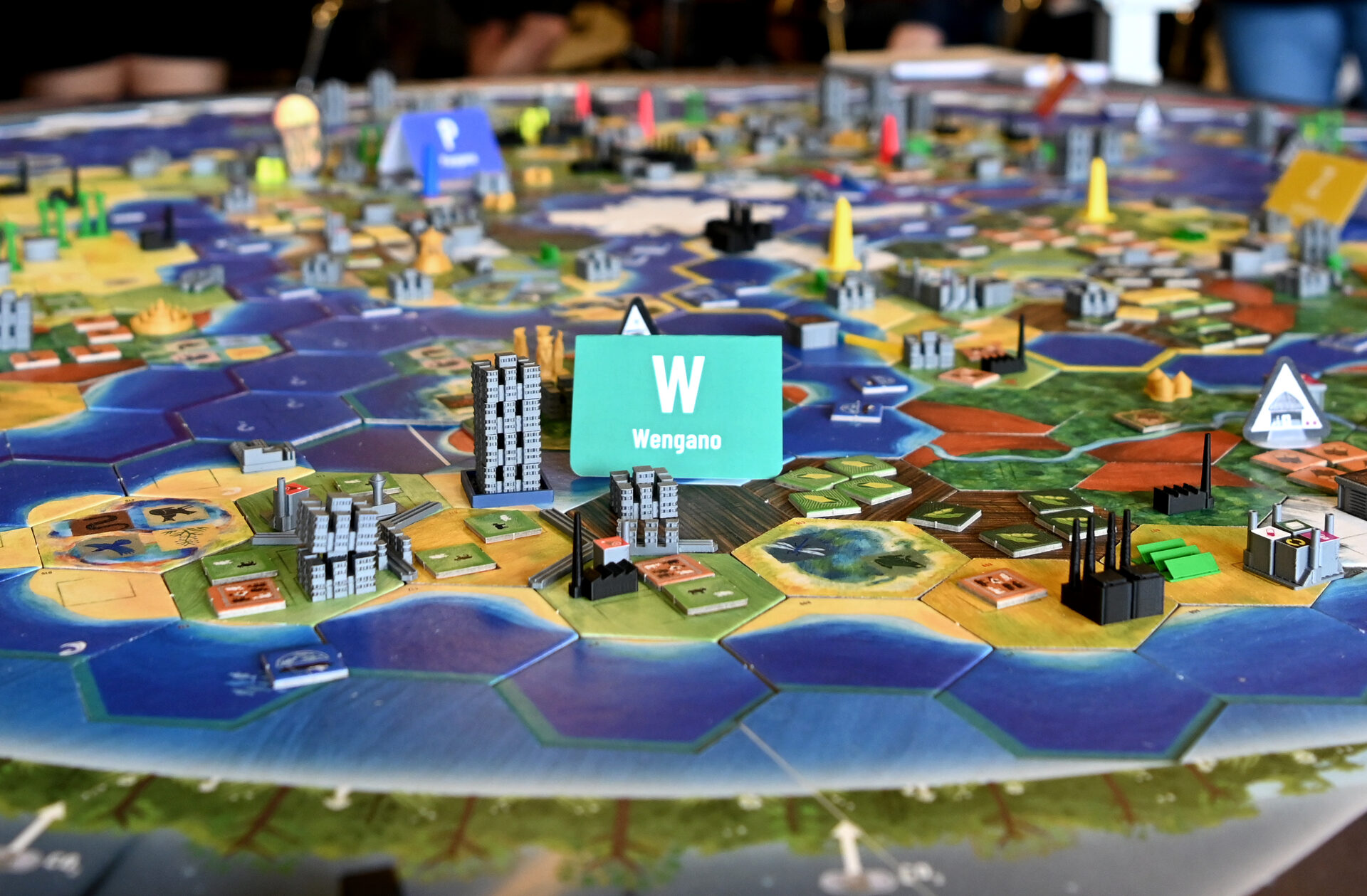
"Anything can happen"
And then? “Unlike other board games,” explains Jonas Jagdziewski of the SQuArE leadership team, “anything can happen.” Starting from the present, each round of the game goes through three phases: Global events change the starting conditions; then negotiations take place and decisions are made; and finally, the effects of those decisions on the climate, the economy, society, and international relations become apparent.
Decisions and Consequences
For example, a country might deliberately deviate from the 1.5-degree climate pathway to boost its business, only to find itself facing civil protests and extreme weather events. Peace treaties and nuclear wars, spying on other nations or trusting them—everything has consequences that aren’t always predictable.
“These conflicting goals are intentional,” explains Christina Schönberger, the co-director, “as is the initial chaos. Each team must first define its goals and develop a strategy—that’s similar to starting a business.”
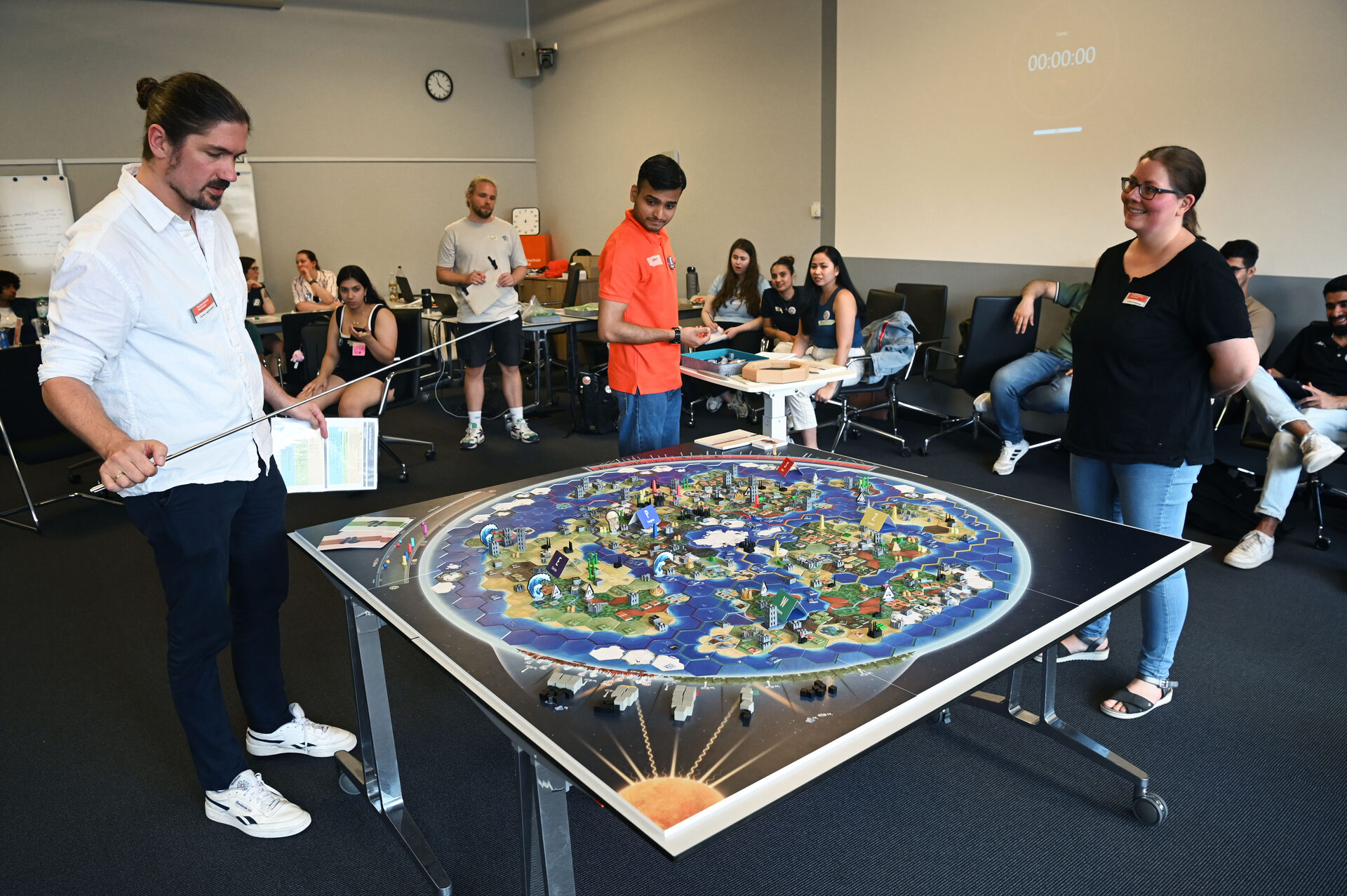
Environmental Protection and Communism
In the game held at the Fachhochschule Dortmund—the first of its kind at a German university of applied sciences, the first time with more than 45 participants, and the first time it was multilingual—the nations managed to stay within the 1.5-degree target for a long time. However, this put a strain on supply chains and led to food and housing shortages.
Some countries therefore increasingly relied on government control of production and supply. Many decisions were based on trust and compassion. The teams helped one another during local crises and tackled global problems together.
Civil society used its capacity to drive change and act as a regulatory force, initiating some social improvements, although certain key advances—such as gender equality—were not achieved.
"We are not powerless"
For Jagdziewski and Schönberger, the positive feedback from participants is the clearest indication that the World Climate Game has achieved its goal: “We wanted to help them realize that everything is more complex than they thought, but that, on the other hand, they are not powerless. The game doesn’t just tell them this—it lets them experience it for themselves. We’re not powerless; we can choose; we can decide what we buy; we’re capable of taking action, even if we don’t have all the information.”
In November, SQuArE will host the World Climate Game for the Faculty of Business Studies, and in the summer of 2027, it will be held university-wide for the second time.