
About the project
The number of malignant skin cancers is increasing worldwide. The Essen Skin Cancer Center alone treats more than 2000 patients every year. Many are seriously ill and the cancer has already spread. In order to save their lives, intensive research is being conducted into increasingly individualized therapies.
Medical computer scientists at Fachhochschule Dortmund are working on improving this by systematically evaluating the wealth of available data with AI.
Together with partners from the Faculty of Medicine at the University of Duisburg-Essen, a research training group has been established. Twelve researchers from the fields of computer science, statistics and psychology have now started their doctorates at the WisPerMed Research Training Group. Over the next three years, they want to use their interdisciplinary research to develop new methods and solutions to support the fight against skin cancer (malignant melanoma). Among other things, they will be able to draw on anonymized patient data from the dermatology clinic.
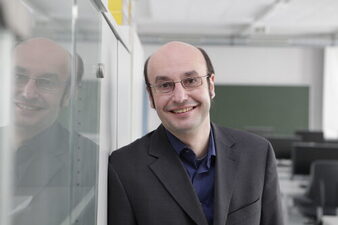
"We want to develop something that will significantly improve care for skin cancer patients in the clinic by providing doctors with the best possible support in their decisions," says Matthias Becker, scientific coordinator of the new research group. One example: AI-supported algorithms will be used to evaluate the data in order to individually predict potential side effects of chemotherapy, for example, and adapt therapies accordingly. "Machine learning may be able to recognize structures and patterns in the data that humans cannot see," says Matthias Becker. Prof. Dr. Britta Böckmann adds that new methods for integrating data and knowledge are needed to make the different types of information accessible in a user-oriented way. The Fachhochschule Dortmund professor is the spokesperson for the new research training group.
Funding by the DFG
The German Research Foundation (DFG) is supporting the project with more than 5 million euros. The first step for the seven female and five male doctoral students of the research group was a comprehensive teaching unit on the medical background by the participating clinicians at Essen University Hospital. New for the computer scientists and statisticians: What is malignant melanoma? How is it treated? And most importantly: what needs and requirements do doctors have in their everyday lives that can be addressed with innovative and digital approaches?
The researchers also hope to gain insights from analyzing preclinical image data in combination with clinical data. This is because technical image recognition processes are now sometimes better than the human eye, says Matthias Becke. The use of AI-supported processes is therefore also conceivable as a decision-making aid for doctors.
References and Relationships
- Advancing Multimedia Retrieval in Medical, Social Media and Content Recommendation Applications with ImageCLEF 2024
- A new approach combining a whole-slide foundation model and gradient boosting for predicting BRAF mutation status in dermatopathology
- A Systematic Comparison of Task Adaptation Techniques for Digital Histopathology
- A Transformer-Based Pipeline for German Clinical Document De-Identification
- Automated detection of mitotic figures in H&E hole slide images using pathological foundation models
- BioKGrapher: Initial evaluation of automated knowledge graph construction from biomedical literature
- Comparative analysis of international melanoma guidelines
- Comprehensive Study on German Language Models for Clinical and Biomedical Text Understanding
- Deep learning in computational dermatopathology of melanoma: A technical systematic literature review
- DermaDashboard: Bridging the Gap Between FHIR Standards and Clinical Usability
- Concept-based explanation of neural networks for dermatohistopathology (eP077)
- Medication event extraction in clinical notes: Contribution of the WisPerMed team to the n2c2 2022 challenge
- Moving Beyond CT Body Composition Analysis
- On the Impact of Cross-Domain Data on German Language Models
- Organization 7th ImageCLEFmedical - Caption task and organization of the task at the CLEF Labs Workshop
- Overview of the ImageCLEF 2024: Multimedia Retrieval in Medical Applications
- Preliminary Evaluation of an Open-Source LLM for Lay Translation of German Clinical Documents
- Response to Letter: Re: "Comparative analysis of international melanoma guidelines"
- ROCOv2: Radiology Objects in COntext Version 2, an Updated Multimodal Image Dataset
- Using a Diverse Test Suite to Assess Large Language Models on Fast Health Care Interoperability Resources Knowledge: Comparative Analysis
- Validating Automatic Concept-Based Explanations for AI-Based Digital Histopathology
- WisPerMed at BioLaySumm: Adapting Autoregressive Large Language Models for Lay Summarization of Scientific Articles
- WisPerMed at "Discharge Me!": Advancing Text Generation in Healthcare with Large Language Models, Dynamic Expert Selection, and Priming Techniques on MIMIC-IV