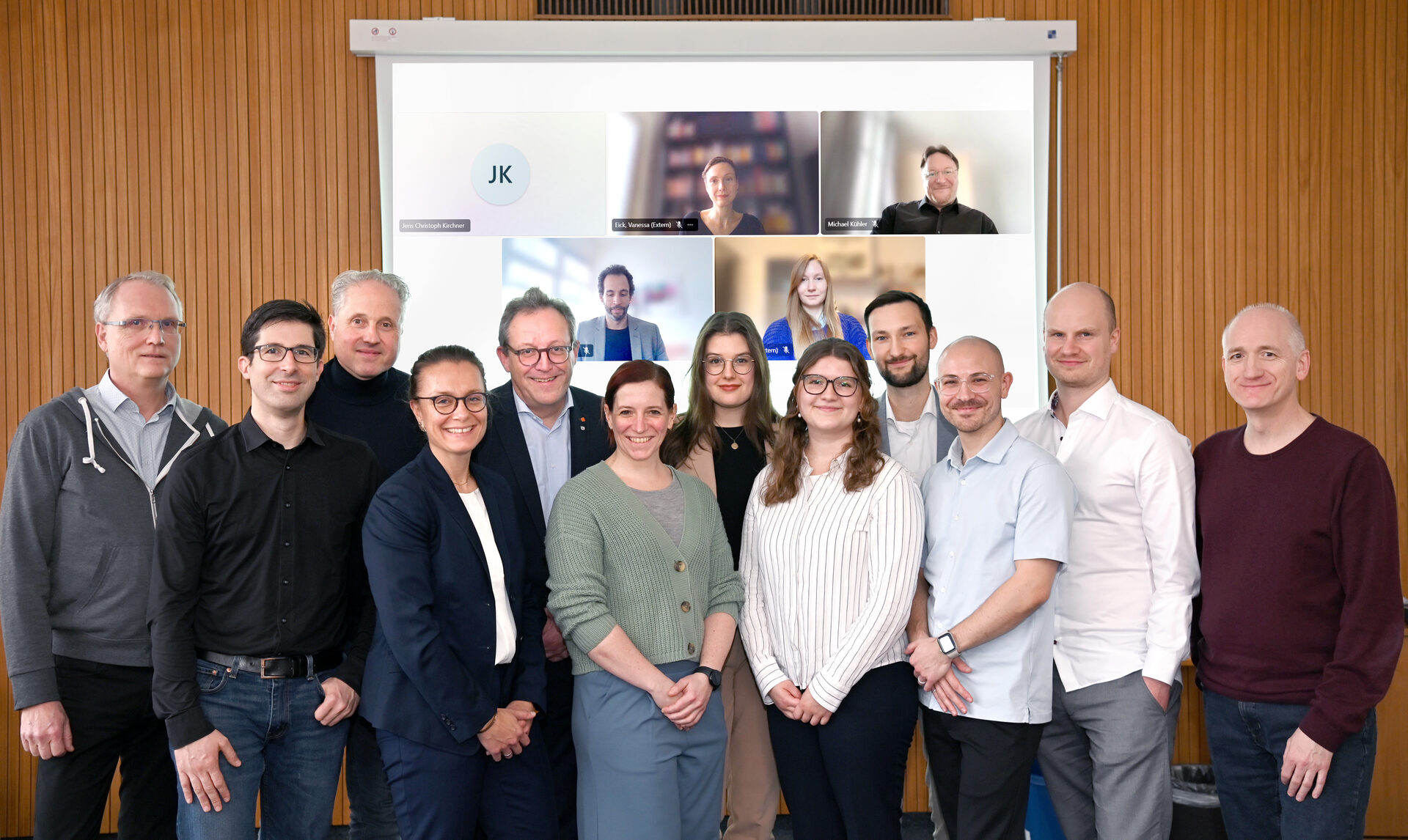
With the "HaMoSEP" project, Dortmund University of Applied Sciences and Arts is strengthening its biomedical engineering expertise. Funded by the Federal Ministry of Research, Technology and Space, the Faculty of Information Technology is creating a research space that closely combines research and teaching. The focus is on skin models as the key to prosthetics and energy transfer.
The acronym "HaMoSEP" stands for "Skin Models in Biomedical Engineering - Simulations, Experiments and Patient Individualization" and describes the interdisciplinary approach of the project. "The skin is the body's central protective barrier, but it is also an important interface for many medical technology applications - from the attachment of prostheses to energy and data transmission for implants," explains Prof. Dr. Jens Christoph Kirchner. He teaches at the Faculty of Information Technology at Fachhochschule Dortmund and is leading the project together with Prof. Dr. Jörg Thiem and other researchers at the university. "Our idea is to develop comprehensive models of the skin in order to better understand precisely this interface function and to be able to take it into account when developing new applications."
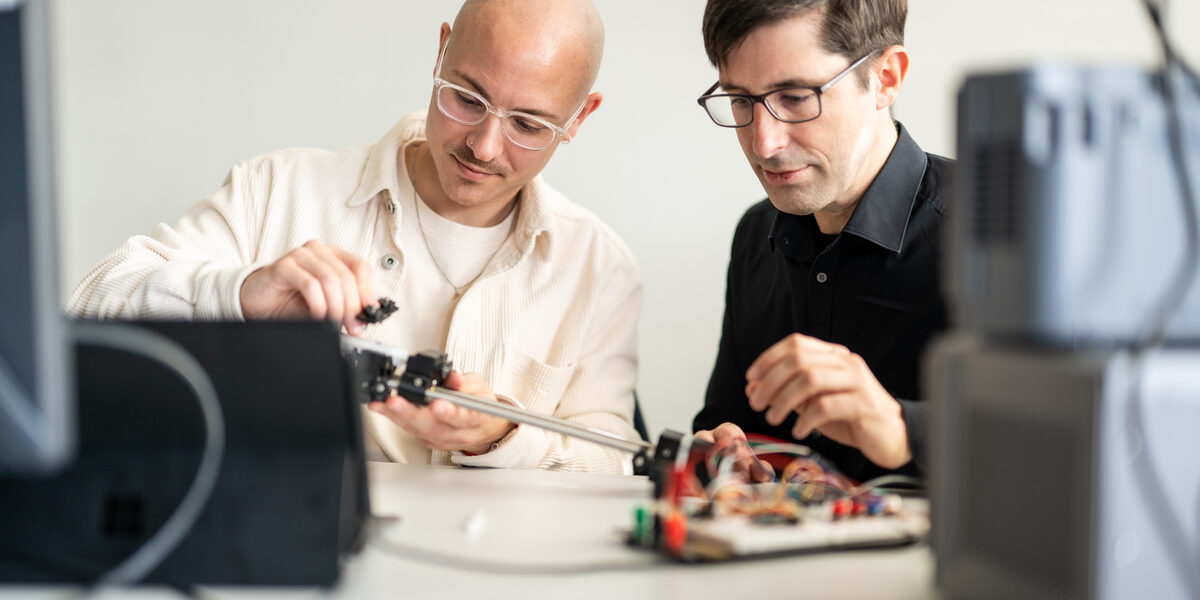
What makes the project special is that it combines computer-based simulations with experimental skin models and measurements on test subjects using imaging techniques. "We are pursuing a comprehensive approach with simulations, laboratory tests and clinical practice," emphasizes Prof. Kirchner. "The students can implement the theory from the lectures in simulations, then test them experimentally and understand the transfer to clinical application."
Concrete fields of application
The research focuses on two application scenarios relevant to medical technology: Prosthetics and wireless energy transmission for implants. "Prostheses have to be firmly attached to the residual limb, which can impair blood flow to the skin," says Prof. Kirchner. "We are investigating what happens to the blood flow when strong mechanical pressure is applied and how prostheses can be designed so that the blood flow to the skin is maintained as far as possible and the skin tissue remains healthy."
The second field of application concerns cardiac support systems. These life-saving pumps are currently supplied with energy via a cable that runs through the abdominal wall and poses a significant risk of infection. "Inductive energy transmission, as is already standard for other implants, such as in the ear, would also be desirable here," says Prof. Kirchner. "The challenge lies in the significantly larger amounts of energy required, which can lead to heating of the skin and, in the worst case, to burns at the transfer site. Here, blood circulation is the decisive factor for the removal of heat." The project aims to develop transfer systems in such a way that burns are avoided.
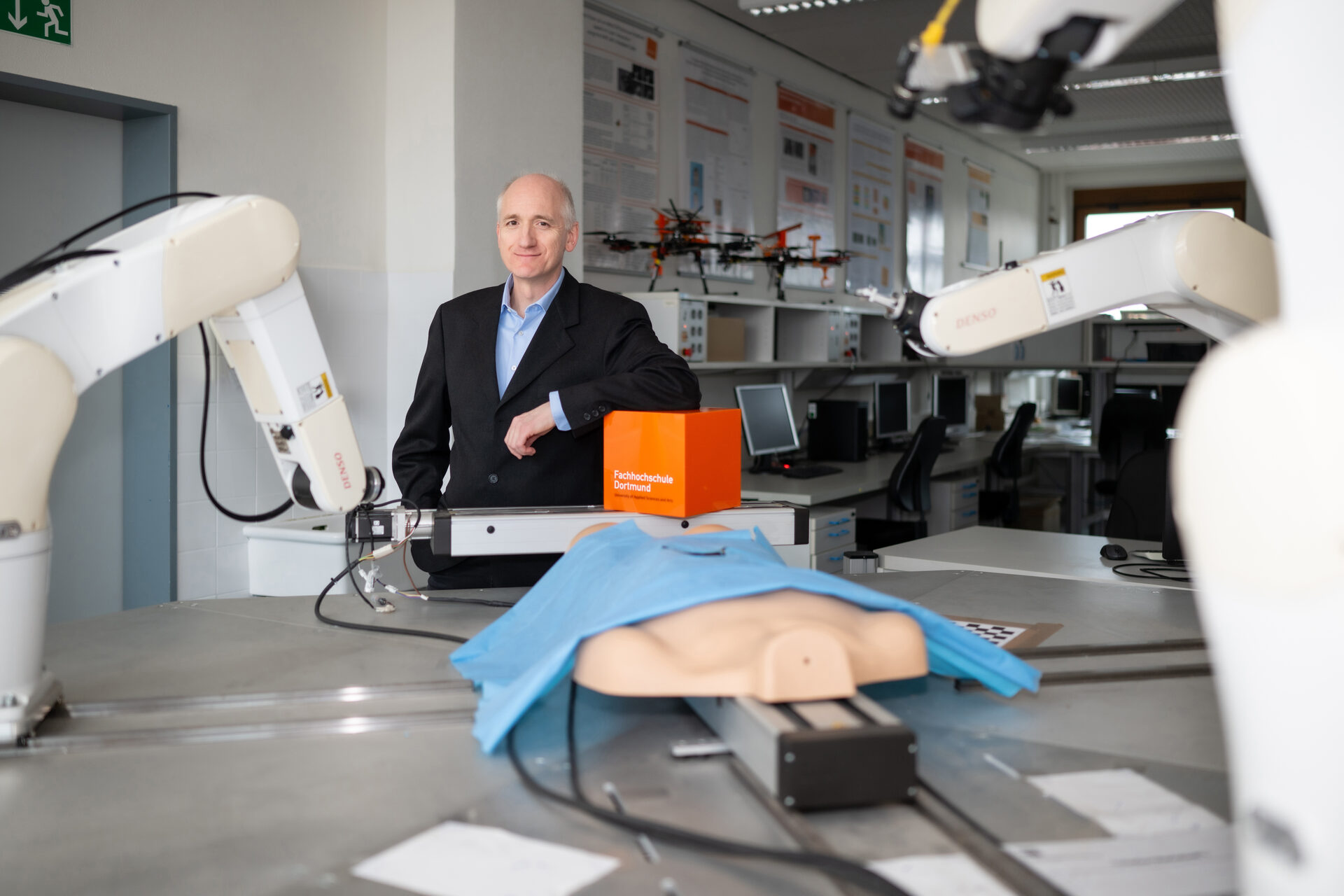
However, the research room and its equipment also offer extensive opportunities for use and starting points for further research and doctoral projects beyond the initially focused fields of application. In the course of the approved project, further research questions are to be identified, concretized and anchored in the university, such as recording the microcirculation of oncological processes in minimally invasive surgery or evaluating the progress of diabetes and diabetic wounds.
Another component of the project is the comparison of skin models with the properties of real skin. This is where imaging techniques come into play, which can be used to record patients' individual skin parameters. "We are investigating how we can reconstruct parameters such as blood flow and thickness of the skin layers from images of the skin," explains Prof. Thiem. "These methods also allow us to develop individual models for patients and thus optimize prostheses, for example." In addition to optical procedures and MRI, impedance measurements will also be used.
3.3 million euros in funding
The Federal Ministry of Research, Technology and Space is funding the project with a total of 3.3 million euros over four years. In addition to experts in biomedical engineering, an ethicist from the social sciences is also involved at Fachhochschule Dortmund. Fachhochschule Dortmund is also collaborating on this project with the Dermatology Clinic at Dortmund Hospital, the Fraunhofer Institute ISC in Würzburg, the Dortmund Federal College of Orthopaedic Technology and the Leibniz Institute for Analytical Sciences.
Funding is aimed at closely dovetailing research and teaching. "The new room is more than just a laboratory for a specific research project, it will also be part of the training at Fachhochschule Dortmund," says Prof. Kirchner. "For example, students will be able to understand topics from the basic lectures in physics and medicine directly on the models and literally grasp their effects in medical technology. However, we will also develop completely new courses on research topics that make interactive use of the space. In this way, the university's guiding principle, the unity of research and teaching, will be actively lived and physically tangible in the rooms to be built," says the researcher.