

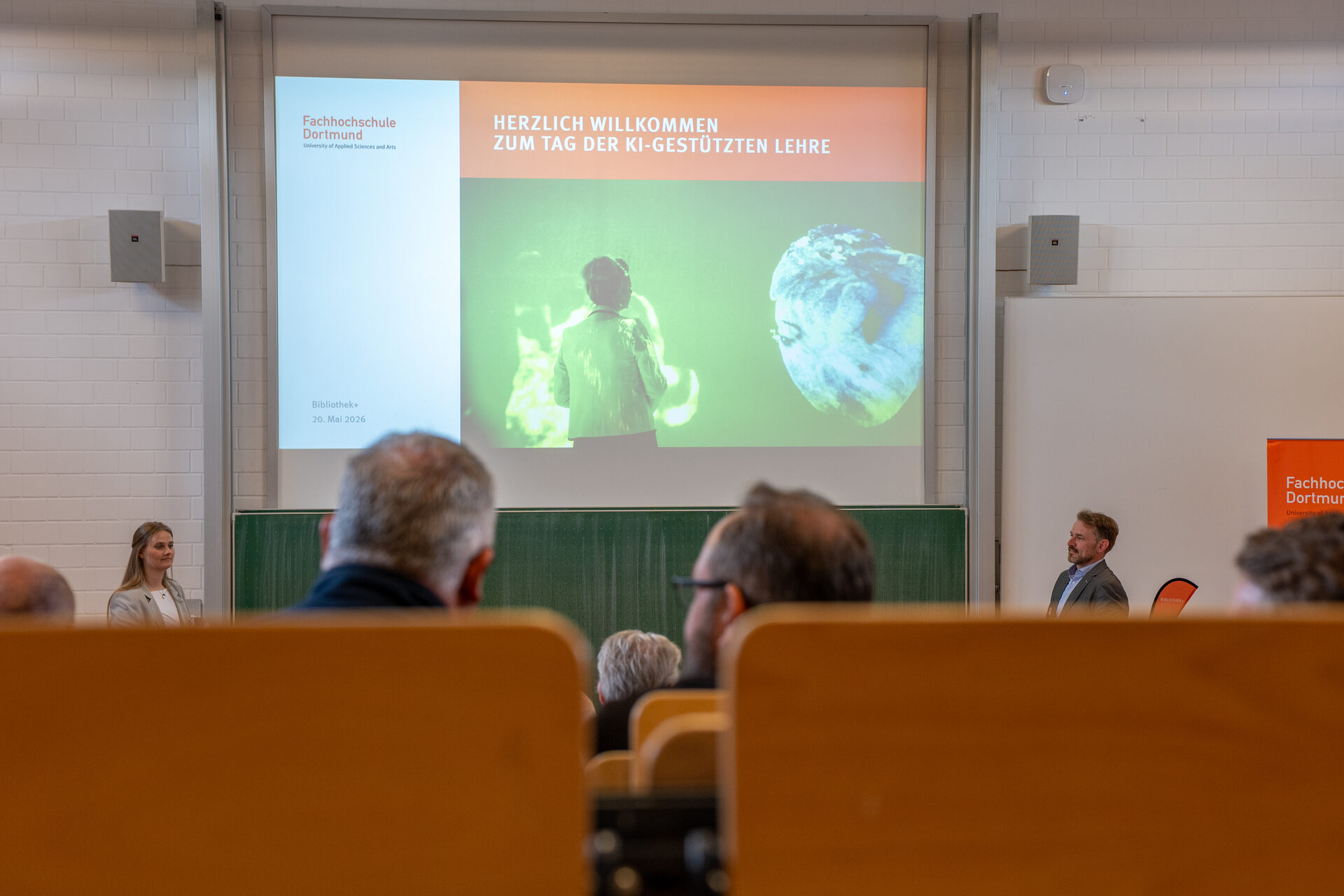
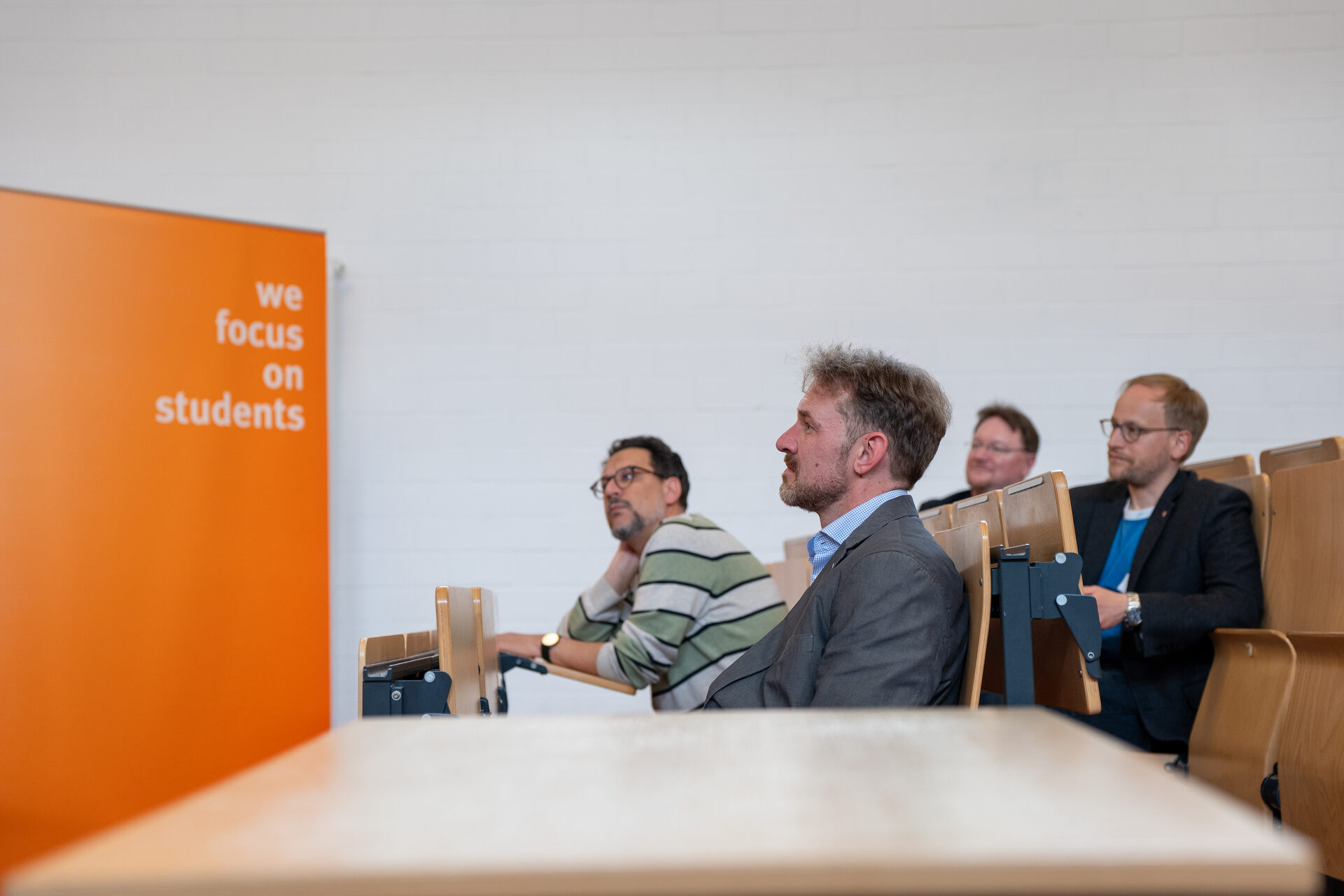
The fifth "Teaching Day" on 20 May 2026 at the Sonnenstraße location - organized this year for the first time by the library⁺ - focused on current developments and possible applications of artificial intelligence in studying and teaching.
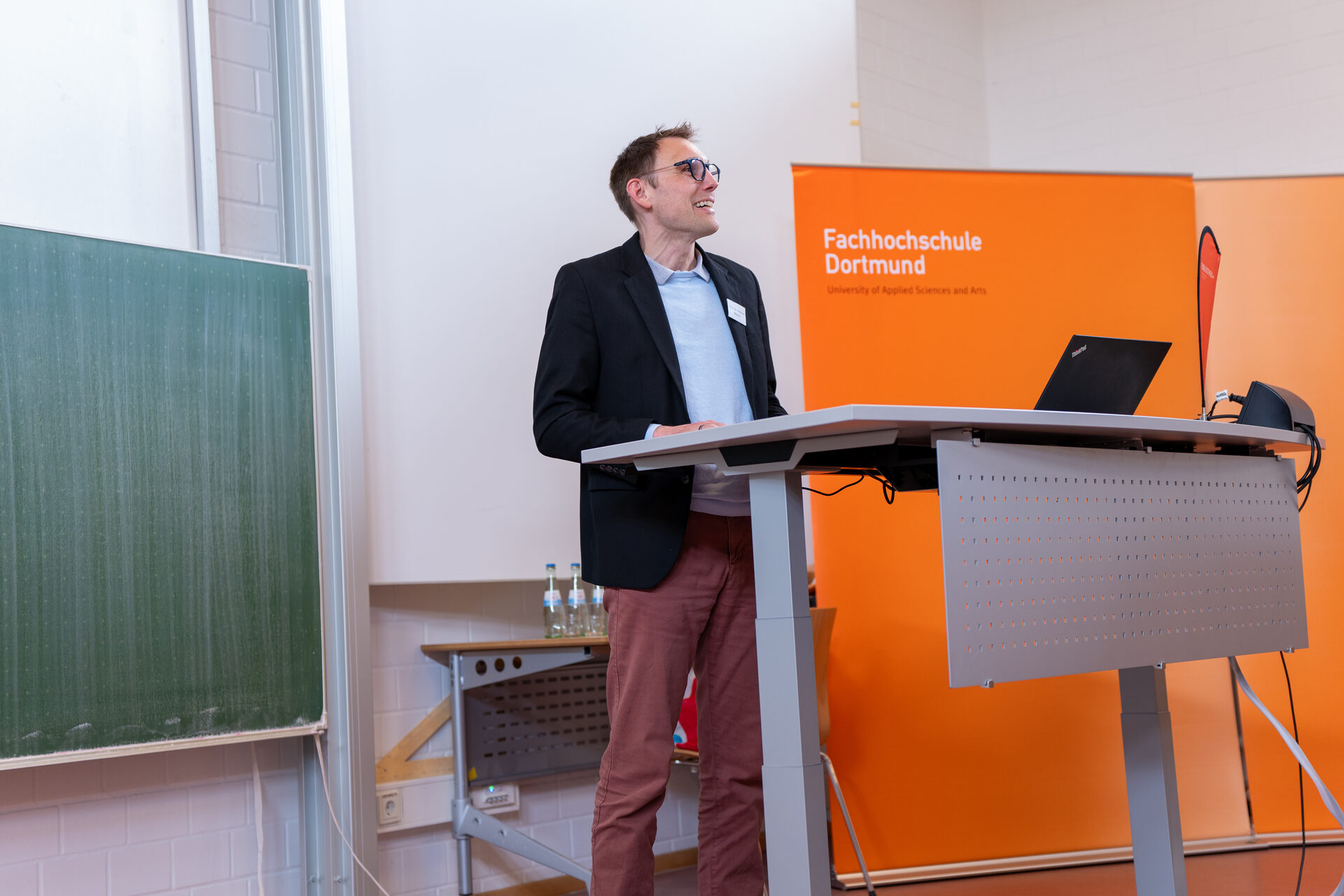
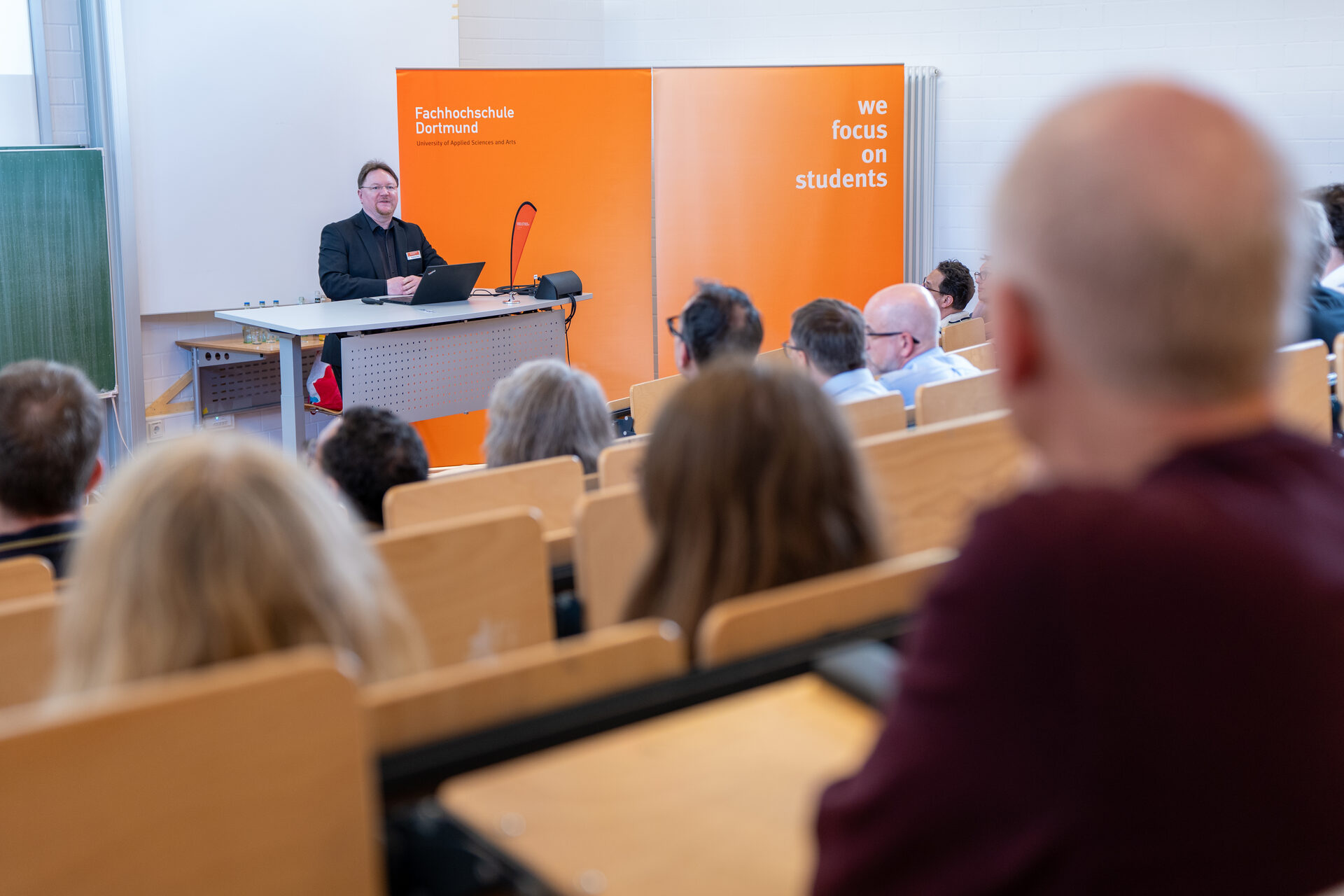
The event kicked off with three keynote speeches. Prof. Dr. Michael Kühler(Opens in a new tab) (Faculty of Applied Social Studies) spoke on the topic of "Epistemic Reality, Deskilling and Human Autonomy", creating an exciting basis for further exchange. Alessia Kunz (Master's graduate from the Faculty of Computer Science) then presented her start-up LearnSlice, which develops chatbots for teaching, especially for dual study programs, and specifically integrates playful and interactive elements into learning processes. The third speaker, Andre Cordes(Opens in a new tab) (Faculty of Computer Science), presented the results of the IPPOLIS research project. The project focused on strengthening AI learning content and promoting problem- and practice-oriented learning through new AI-supported learning aids.
Picture gallery
Gallery Walk with concrete examples
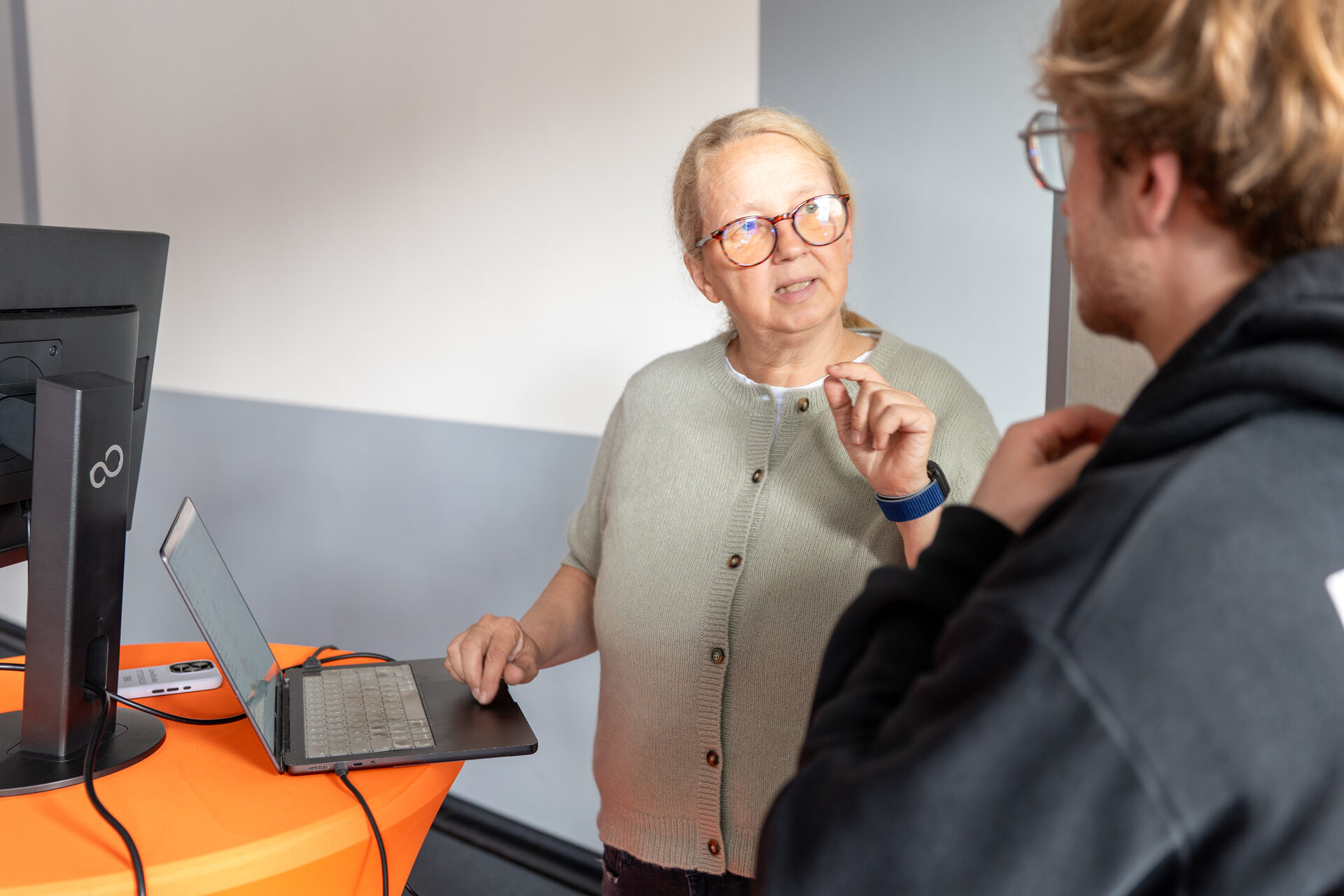
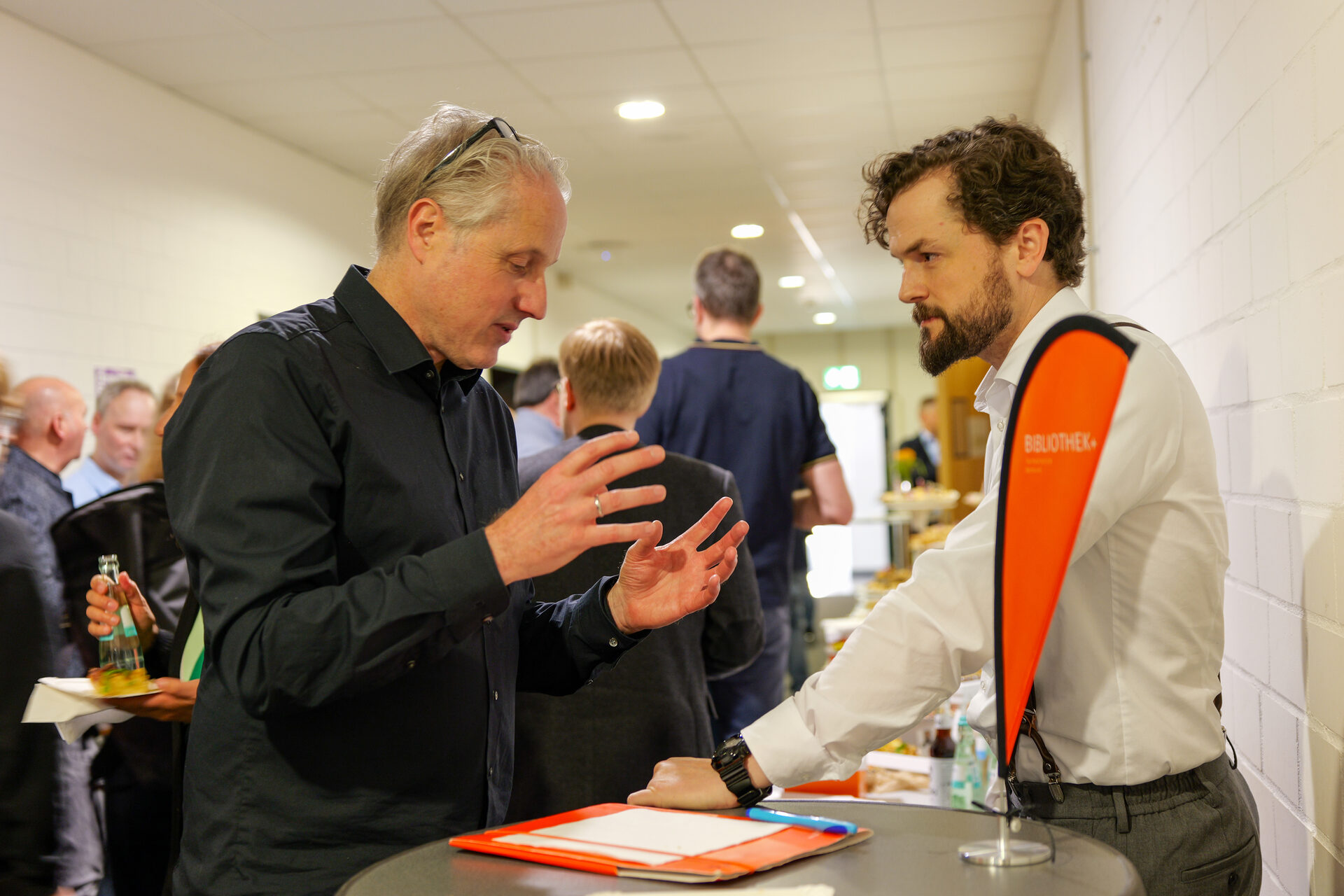
Following the presentations, all participants had the opportunity to visit various stations during the Gallery Walk, where they could learn about and try out specific examples of AI applications at the university. Lecturer Claudia Mai(Opens in a new tab) and student Steven Thele (both from the Faculty of Design) demonstrated approaches to automated research processes and interactive installations. Eva Schameitat and Johanna Munkelt(Opens in a new tab) (both from Bibliothek⁺) presented the “Scopus AI” and Statista tools, as well as AI tools in the “wiso” subject database. In addition, Vincent Beringhoff(Opens in a new tab) (also from Bibliothek⁺) provided insights into working with avatars in the video lab.
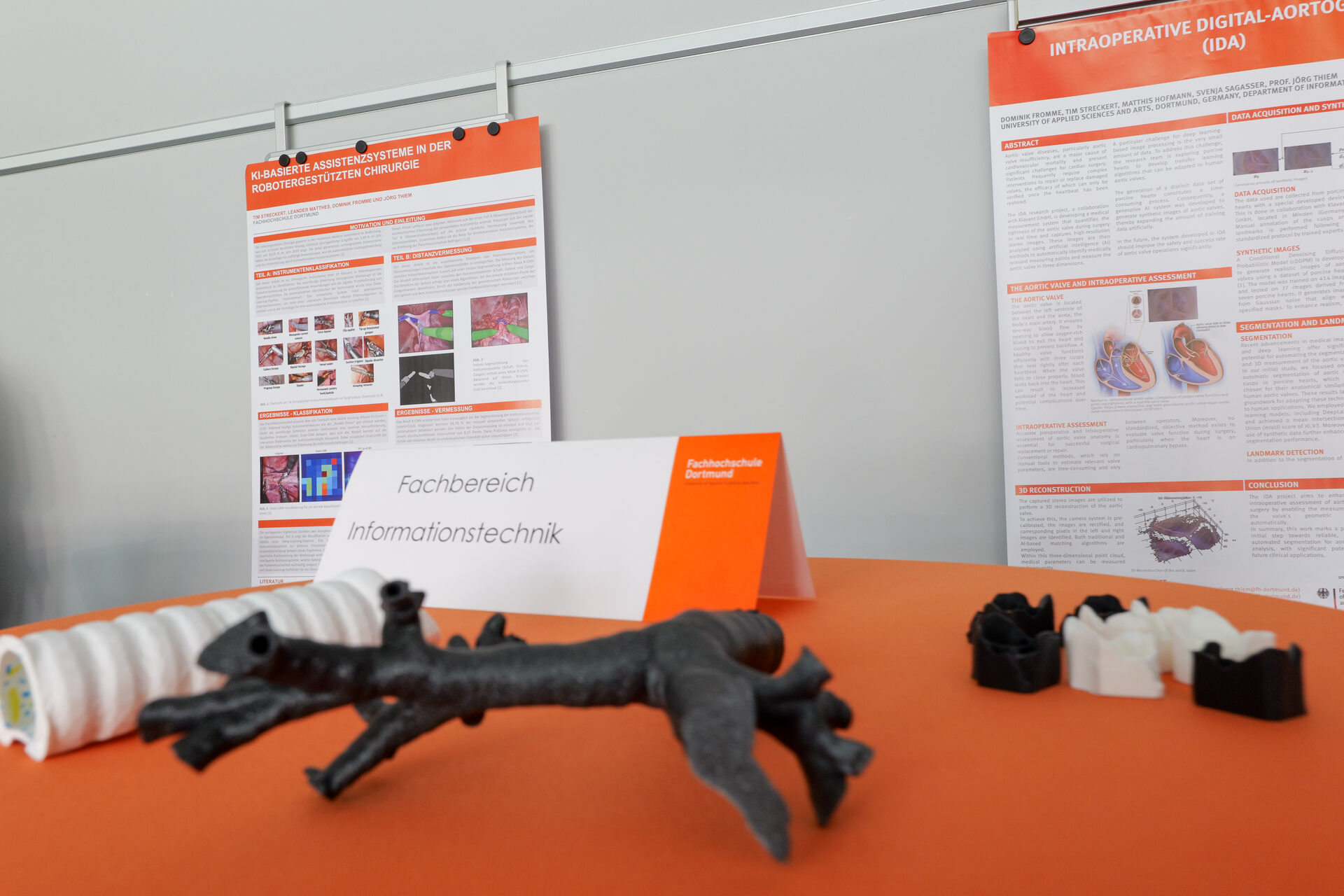
Other stations focused on the use of AI in academic faculties: Dominik Fromme(Opens in a new tab) (Faculty of Information Technology) presented applications of AI in cardiac surgery, Tim Streckert(Opens in a new tab) (also from Information Technology) showed examples from medical robotics, and Benjamin Hecker(Opens in a new tab) (Mechanical Engineering) demonstrated AI-assisted defect detection on a 3D printer as well as approaches to predictive maintenance for tires.
The day ended with a group barbecue in the courtyard, where participants were able to continue their discussions in a relaxed atmosphere.