
Shift Happens! That was the 2026 DART Symposium!
Shift Happens. Under this motto, doctoral candidates and experts gathered on September 17 at the DART Symposium organized by the Graduate Center at Fachhochschule Dortmund to present innovative research projects and discuss research and knowledge transfer amid rapid technological and societal change.

The conference, organized every two years by doctoral students for doctoral students, gave the 50 participants the opportunity to learn about current doctoral projects from various universities and disciplines.
The main themes of this year’s symposium were current developments in AI, sustainability, and research transfer.
In addition to the presentations by doctoral candidates, the DART Symposium featured contributions from various researchers. Among those who spoke were Dr. Isabel Roessler from the Center for Higher Education Development and Dr. Bror Giesenbauer, Executive Director of the DG HOCH-N association. During the panel discussion, Prof. Dr. Michael Kühler and Prof. Dr. Christoph M. Friedrich from the Fachhochschule Dortmund and Nadine Lordick from the KI:edu.nrw project discussed the appropriate integration of AI into teaching.
DART Awards Go to Hatim Barioudi and Benjamin Bracke
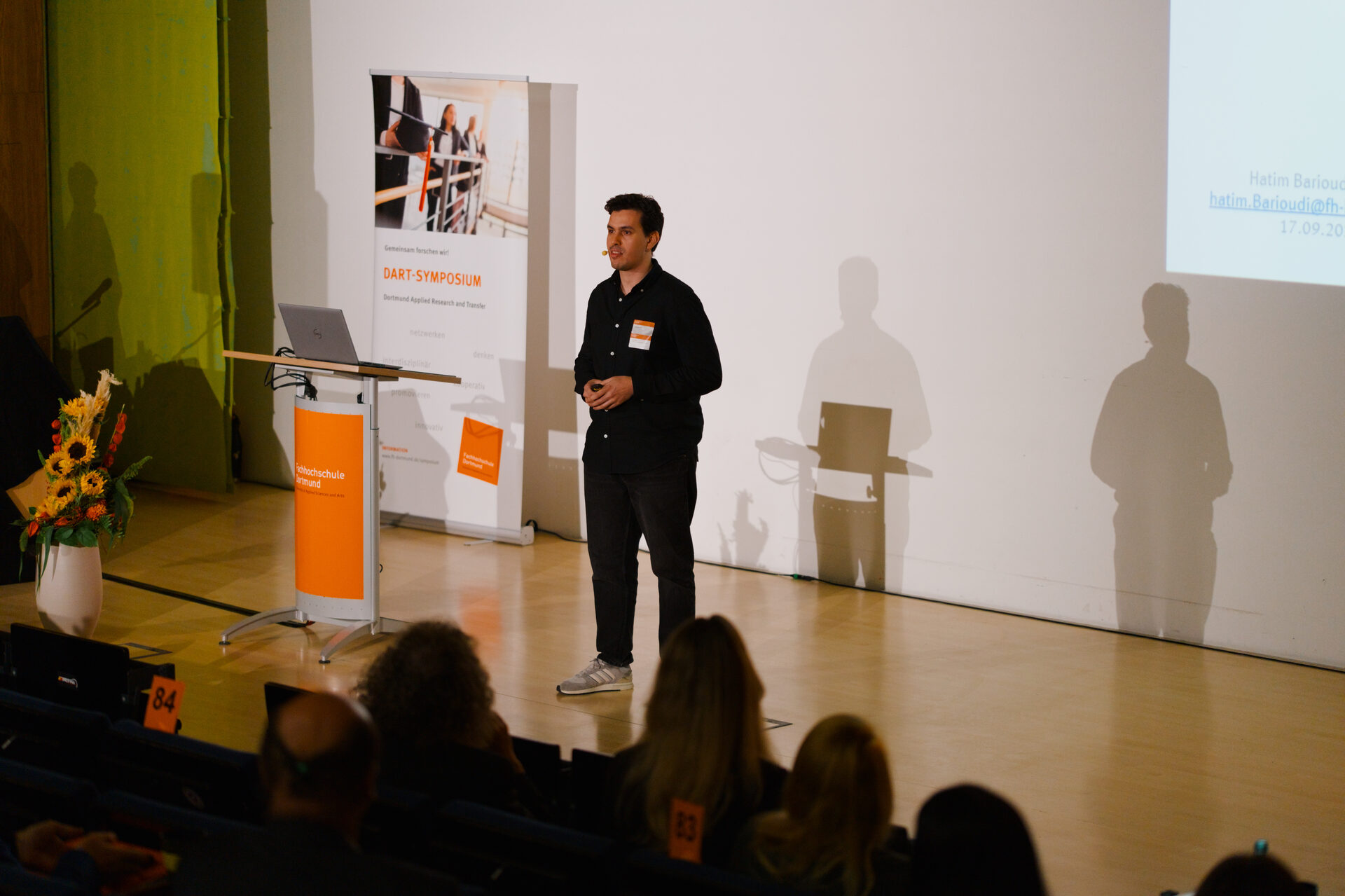
Eight doctoral candidates from various universities in North Rhine-Westphalia had the opportunity to present their research in short talks on stage. United by the themes of AI, sustainability, and research transfer, the topics of their doctoral projects ranged from AI-supported collection and analysis of cardiac data, to reducing material consumption in the repair of photovoltaic systems, and to the attitudes of Muslim women with immigrant backgrounds toward religiosity and gender.
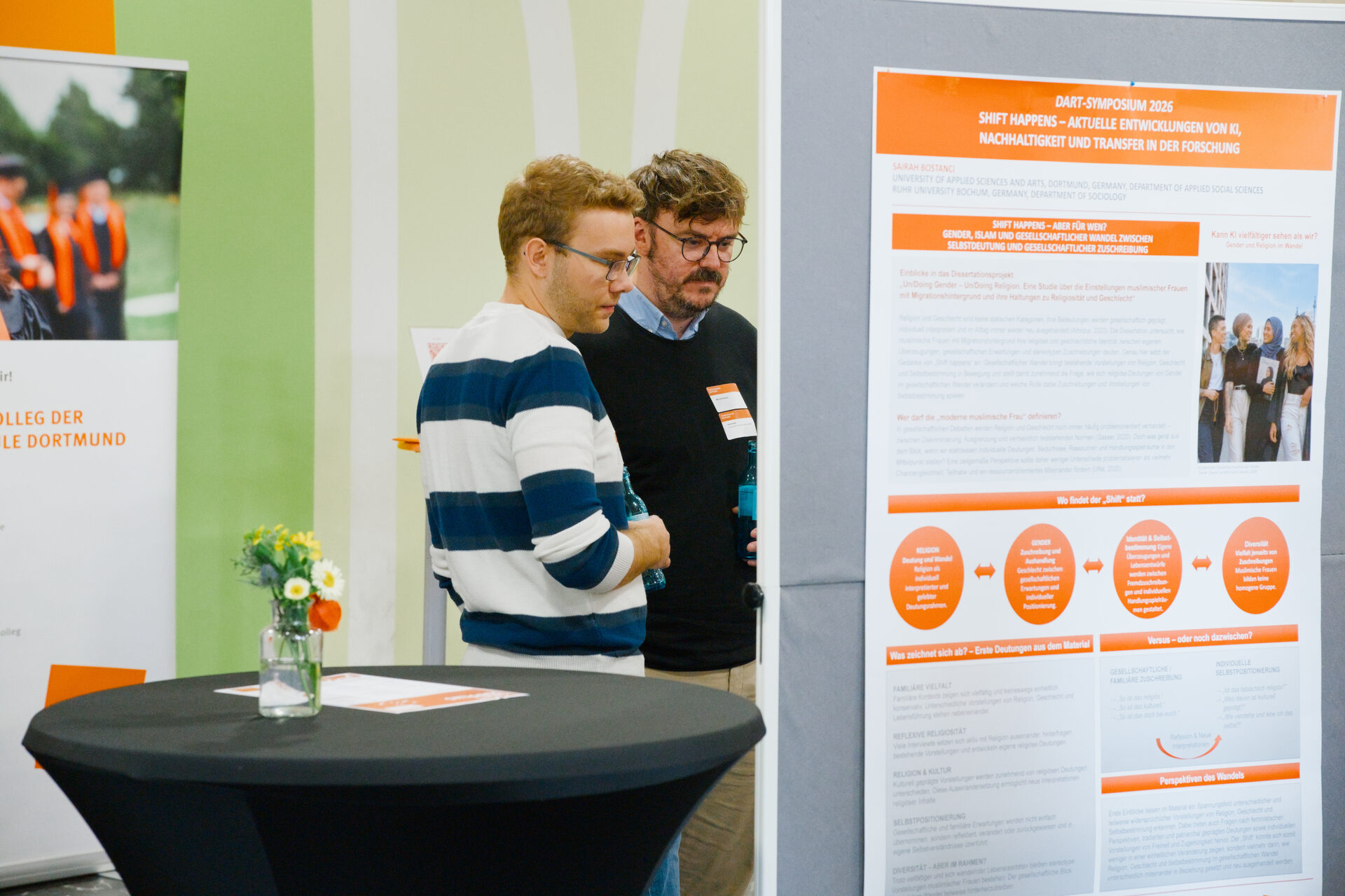
Additional research projects were presented at the poster exhibition, where the doctoral candidates from each project were available to answer questions and engage in discussions.
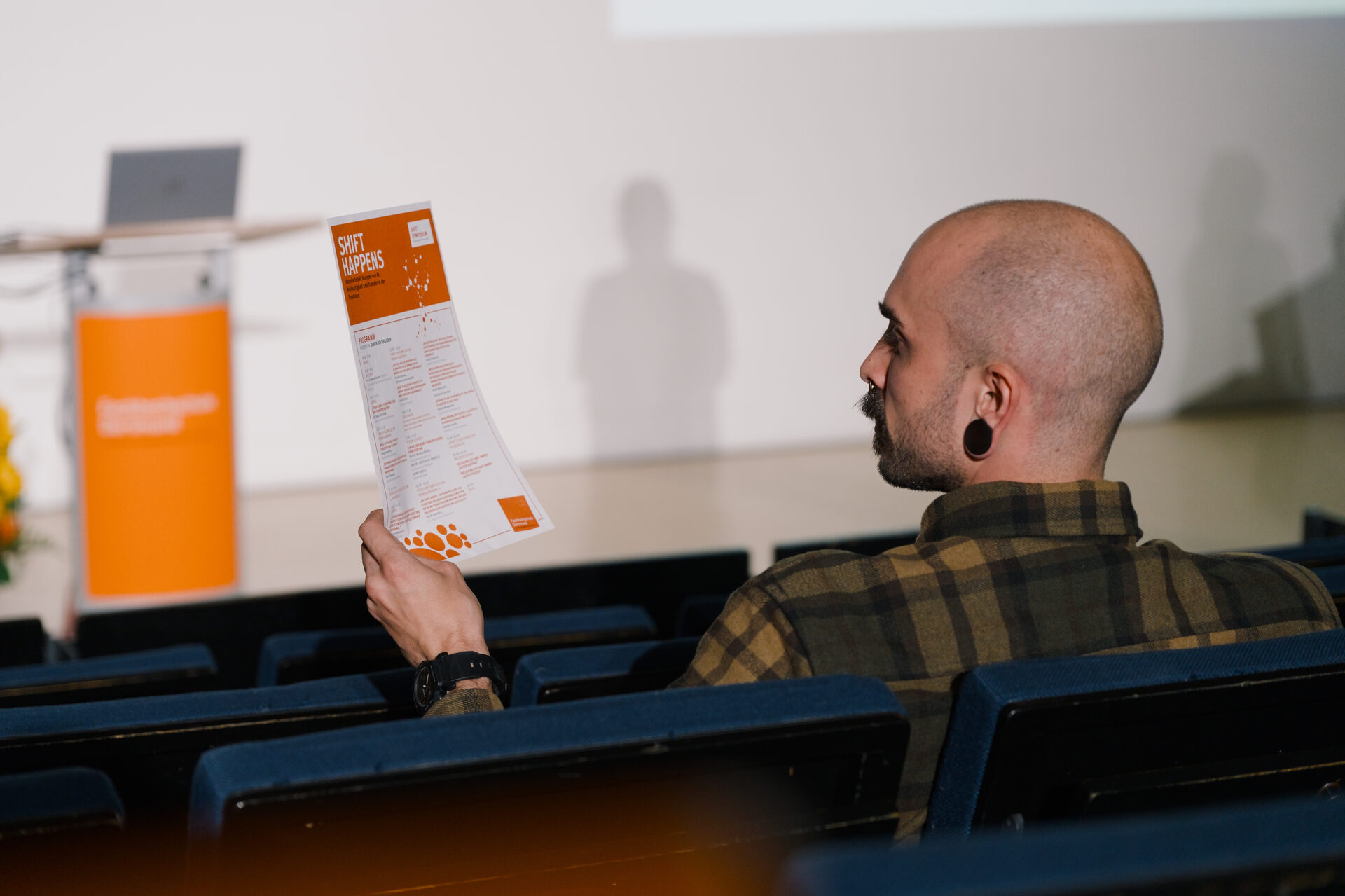
"This year marks the fifth time the DART Symposium has been held," said Iris Bosold-Grund from the Graduate Center at Fachhochschule Dortmund, “and has become an important milestone for our doctoral candidates in recent years. Here, they can not only present their doctoral projects and receive feedback from a large audience, but also network and exchange ideas with doctoral candidates from other universities of applied sciences and experts.” The highlight of the DART Symposium was the presentation of the DART Awards for the best presentation and the best poster. A total of 15 doctoral candidates from universities in Dortmund, Bochum, Cologne, and Gelsenkirchen had submitted their doctoral projects for consideration. In deciding the winner of the DART Award for Best Presentation, the jury evaluated the content and scientific quality, the presentation style, the visual presentation, and the clarity of the presentation. The award for Best Poster was based on visual presentation and the clarity of the content. “We really considered whether we should split the prizes […],” said Prof. Dr. Yves Rosefort, a jury member and professor at Fachhochschule Dortmund, noting just how closely the competitors were matched.
In the end, however, one person took home the prize, and one presentation and one poster stood out from the rest. The winner of the DART AWARD for “Best Poster” was Benjamin Bracke with his poster on his doctoral project, “How Old Is the Heart? AI-Based Age Estimation from the ECG.”” The DART AWARD for “Best Presentation” was won by Hatim Barioudi, who is pursuing his Ph.D. at the Faculty of Information Technology at Fachhochschule Dortmund. Barioudi is researching methods for the multimodal capture of anticipatory gait adjustments for future bionic prostheses. Conventional prostheses place a strain on the body due to their weight and lack of mobility. New, motorized prostheses are designed to mimic the function of the missing limb by actively supporting movement, but they react with a delay due to the processing time of nerve signals. Using the AI-based algorithm developed by Barioudi, future prostheses should be able to anticipate the body’s movements and support them even more quickly and in a more personalized manner.