

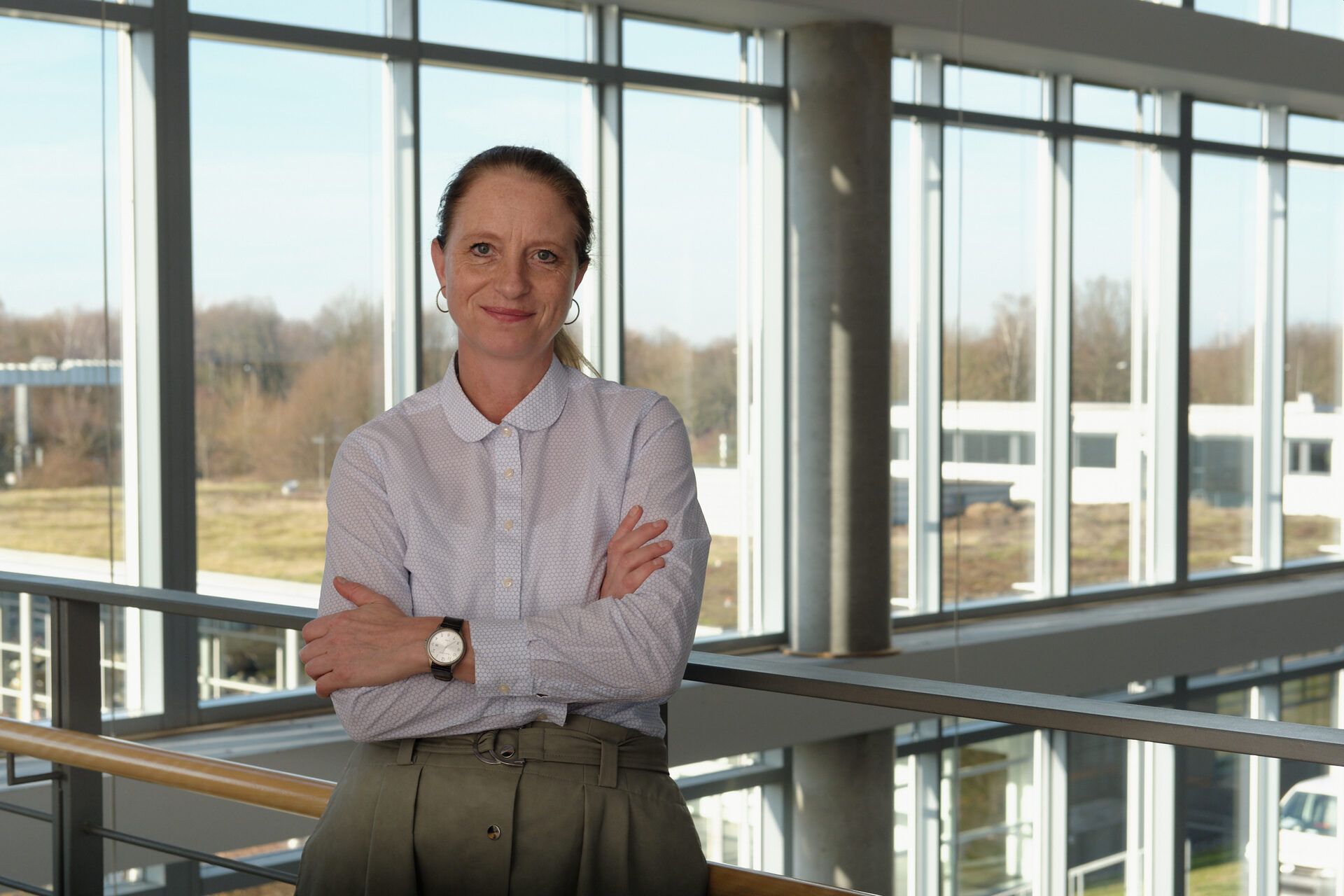
As part of the Germany-wide joint project "Seelenarbeit im Sozialismus", a research team from Fachhochschule Dortmund specifically investigated academic psychology in the GDR in the sub-project "Psychology under political dictate and justice". The project leader was Dr. Susanne Guski-Leinwand from the Faculty of Applied Social Studies.
What is the central finding of your research?
Our BMBF-funded sub-project "Psychology under political dictate and justice" in the research network "Seelenarbeit im Sozialismus: Psychologie, Psychiatrie und Psychotherapie (SiSaP)" (funding number 01UJ1908BY) was based on three pillars: Firstly, the investigation of academic psychology over the entire period of the GDR, alongside the question of how authorities and ministries exerted influence or showed interest in psychology. And then also how the Ministry for State Security (Stasi) participated in, enriched or made use of psychology.
Academic psychology in the GDR was dominated by political guidelines, so that only a few universities established degree courses in psychology, but these were assigned specializations that were politically justified by the economic policy guidelines from the SED government's five-year plans. The focus of GDR policy was on human productivity and the politically desired development of people as "socialist personalities" who would support a socialist society. Against this backdrop, developmental psychology and educational psychology issues, as well as social psychology issues in research, were very much the focus of politics and individual ministries, such as the Ministry of National Education, but also the Ministry of Higher and Technical Education. One can therefore speak of an instrumentalization of psychology. We have also reported on this in detail in various publications.
In addition, we have digitized diverse and meaningful specialist literature such as congress reports and specialist journals on psychology in cooperation with renowned educational institutions and have thus been able to preserve it as a professional and cultural heritage. We have also compiled a comprehensive bibliography of specialist publications in the GDR and in connection with reunification as a database, which has since been transferred to the Leibniz Institute for Psychology in Trier and is thus available to young academics, further research projects and the interested public.
The Ministry for State Security also oriented itself to the current trends and focal points of academic psychology: for the MfS Law School in Potsdam, sub-areas and selected concepts of psychology were used to create -secret- teaching materials for officers and distributed as "gray literature", mostly marked as Geheime Verschluss-Sache (GVS), also in areas outside the JHS. This included various authorities or district offices, etc.
We found it interesting that the direction of the use of psychological expertise was not an order from the Stasi, but that the Stasi used it "quietly", so to speak. We found no evidence that psychologists were commissioned by the Stasi to carry out special assignments. We also found it interesting that Western sources of psychological literature were also used in the Stasi's secret manuscripts or were sometimes cited as sources.
How did you proceed with your team?
We chose an interdisciplinary research approach, our project group consisted of two historians and two psychologists: this allowed us to contextualize the subject-specific events and changing focal points and topics in relation to the relevant policies, political events and decrees. This was very important in order to be able to recognize the developments in academic psychology, but also the use of psychological subject content by the Stasi as parallel events to the political objectives and challenges.
We conducted our research from multiple perspectives, i.e. we looked at various aspects of the sociology of science (for example, the work of the Scientific Society for Psychology) as well as scientific policy and scientific anthropology, etc. The various members of staff spent over 400 archive days out and about, so we were able to compile the holdings in a network-like manner.
What challenges have arisen in the project?
In general, the greatest challenge was to research and evaluate subject-specific material in a wide variety of archives (various university archives in Berlin, Jena, Leipzig, Dresden, Halle, etc.), various state/capital archives, various sections of the Federal Archives in Berlin and Koblenz and the Stasi Records Archives in Berlin, Erfurt and Dresden. These archives also differ in terms of the way they identify their holdings and research options. In addition, right at the beginning of the second funding year, the unexpectedly long period of the corona pandemic brought with it extensive and prolonged archive and library closures, and further organizational changes (relocation of archive material, changes in reading room capacities, changes in responsibilities in content areas of the collections, changes in scheduling booking systems, etc.) tied up time resources that were initially a major concern for the implementation of the research project. Out of this necessity, we then had to search the state of NRW for, for example, available library holdings relating to the GDR. During this search, we came across a large number of institutions in NRW that offer services on the subject of the GDR/SED politics/reunification or counseling for those affected by the SED and its victims. We then systematically compiled these institutions in a further project assigned to the university development plan for Fachhochschule Dortmund.
As a result, we worked with SHKs, WHKs and colleagues in IT at Fachhochschule Dortmund to create a digital map that takes into account the aspect of sustainable research and education: On this map of NRW, you will find institutions with their various offers on the topic of the GDR clearly displayed. You can find this digital map under the heading "30 Years of German Unity: Places of Research and Encounter in NRW" on our project page(Opens in a new tab) .